Before we get started, please watch this teaser VLOG to get you amped up for what I am about to discuss……
Wastewater is one of the critical parts of our first-world civilisations – but it is often overlooked. There are certain things the average person simply doesn’t think about – Wastewater treatment and management is one of those things. Wastewater, after treatment, is very valuable as a potential source of potable water, particularly in arid/semi-arid countries that often struggle with sourcing water (hint: including AUSTRALIA) (Pescod 1992).
Constituents in wastewater can be varied, often depending on the location i.e. more heavy metals can be sourced from power stations, heavy industry or mining, and similarly high levels of nutrients (phosphorous and nitrogen) are a result of fertilizer usage from agriculture (Tchounwou et al. 2014). These constituents and others – coined as ‘Constituents of Concern’, are harmful to the environment and are also a challenge for the wastewater treatment process (Water Corp 2020).
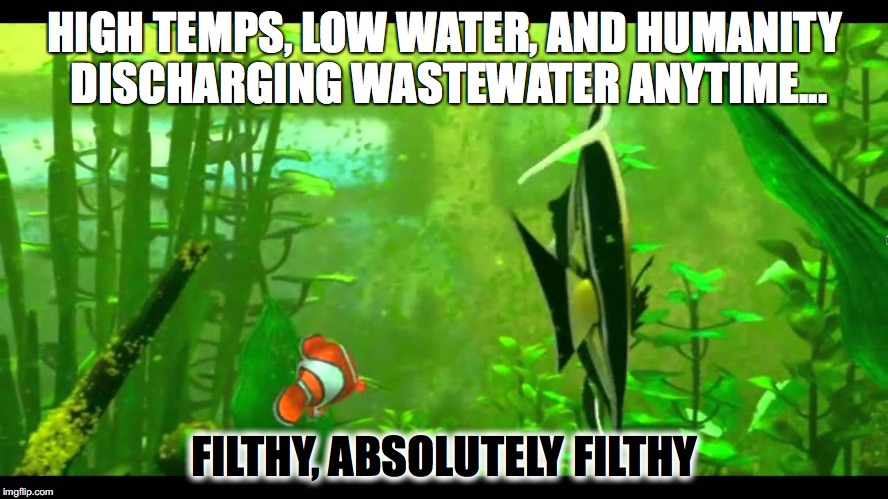
However, there is one critical constituent of concern that has arisen more in recent years – Microplastics.
Forever Taken for Granted
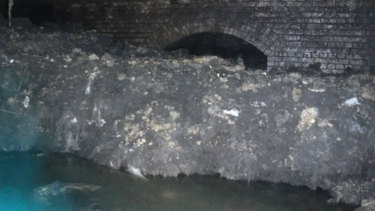
The problem with wastewater and its treatment, at least in a first-world country like Australia, is that people take it for granted. People simply don’t acknowledge how important it is and have taken to flushing things that shouldn’t be disposed in a toilet or kitchen sink. Some examples include cooking grease and fat and common hygiene products (i.e. baby/wet wipes, tampons, Q-tips, cotton buds & dental floss) – seriously come on guys! Of course, there are some even stranger items, including cigarette butts, condoms or illicit drugs!

Also, you may be shocked to discover that even products which advertise their ‘flushability’ aren’t actually suitable to be flushed down…. Its best to think about what you’re flushing in the first place.
Wasting the Environment…..
Not only do the aforementioned unflushable (and ‘flushable’) items impact wastewater treatment methods and their effectiveness, but they’re also bad for the environment, directly and indirectly. Treating the more difficult items, and removing unwanted materials requires more electricity (Maktabifard, Zaborowska & Makinia 2018) – which isn’t good for the environment, as we know.
However, what is more unknown is that wastewater treatment plants are a huge source of microplastics – bad for the environment. Microplastics, in the form of microbeads are designed for use in cosmetics, and for medicinal and industrial purposes, which are either washed down a sink, or runoff into wastewater drains and gutters. Microplastics are also born from the fragmentation of larger plastic products caused by the sun, wind, water, or other means, as they’re deposited in landfills or littered (Conley et al. 2019).
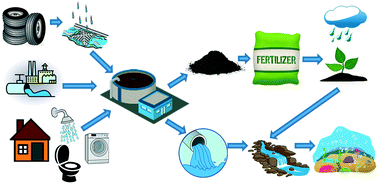
Microplastics are one of the largest effects our modern society has on the environment at this current time. These tiny plastic fragments have the potential to release harmful pollutants and chemicals to flora, and fauna (once ingested), particularly in aquatic environments. Large numbers of marine life, including fish and turtles (and subsequently their predators) ingest these little, un-break-down-able, plastic devils. It would surely be dangerous to any species who eat aquatic life…….. oh wait.

Someone should do something about this!!!!!!!……?……
There is no question that this is a problem of our own making. To overcome problems like this and the others that plague our modern world, the United Nations have listed 17 Sustainable Development Goals (SDG’s). These are based on the principle of not leaving anyone behind – something I believe we should all support. Amongst these include goals based on climate action, reduced inequality and the irradication of poverty, however the one critical goal relevant for this rant… oh sorry “discussion” is SDG 6: Clean Water and Sanitation.

The basic idea behind this goal is that everyone has the right to clean water and sanitation. The one key target is that by 2030, the aim is to considerably increase water quality to increase how much wastewater can successfully be treated, by reducing pollution, dumping of rubbish, and the general release of hazardous chemicals and materials. This will supposedly halve the amount of untreated wastewater.
….and that someone is you, and me… and everyone!
I thoroughly believe that we as individuals have a greater power over making the world more sustainable than we may think.
To help achieve SDG 6 we need to reduce the amount of rubbish that litters our waterways and bodies, hence we will be able to treat water more effectively (and use less electricity!!!). But where do a lot of these contaminants come from? Manufacturing! The big companies (Apple, Samsung, automotive companies etc) often produce their products in developing countries with cheaper labour costs. This makes treating wastewater even more difficult there, which is the UN’s goal – to improve the ability of effective wastewater treatment in developing countries.
Of course, these companies can alter their standards to reduce harmful wastewater runoff, or at least improve the runoff quality – they need to play their part as well! However, consumers (i.e. us, in the western, developed world) buy these products. Hence, by consuming less we are reducing the amount produced (demand vs. supply) and the amount of wastewater pollution, allowing for easier and more effective treatment!
We can also make changes at home too! Properly disposing of our used products will reduce the amount of constituents of concern (including MICROPLASTICS) going into our environment, either via wastewater treatment plants or runoff. To properly manage microplastic contamination in water bodies and streams, efforts should focus on a diverse range of microplastic sources (UN Environment Programme 2018).
If we make even a few minor changes to our everyday life, we can make the world more sustainable. Together we can make a difference!
References:
Conley, K., Clum, A., Deepe, J., Lane, H. and Beckingham, B., 2019. Wastewater treatment plants as a source of microplastics to an urban estuary: Removal efficiencies and loading per capita over one year. Water Research X, 3.
Maktabifard, M., Zaborowska, E. and Makinia, J., 2018. Achieving energy neutrality in wastewater treatment plants through energy savings and enhancing renewable energy production. Reviews in Environmental Science and Bio/Technology, 17(4), pp.655-689.
Pescod, M., 1992. Wastewater Treatment And Use In Agriculture. Rome: Food and Agriculture Organisation of the United Nations.
Sydney Morning Herald. 2019. ‘Don’t Feed The Fatberg’: Mass Of Oil And Baby Wipes Blocks UK Sewer. [online] Available at: <https://www.smh.com.au/world/europe/don-t-feed-the-fatberg-mass-of-oil-and-baby-wipes-blocks-uk-sewer-20190109-p50q9v.html> [Accessed 12 August 2020].
Tchounwou, P., Yedjou, C., Patlolla, A. and Sutton, D., 2014. Heavy Metals Toxicity and the Environment.
UN Environment Programme. 2018. Wastewater Treatment Plants – A Surprising Source Of Microplastic Pollution. [online] Available at: <https://www.unenvironment.org/news-and-stories/story/wastewater-treatment-plants-surprising-source-microplastic-pollution#:~:text=Microplastics%20are%20defined%20as%20pieces,effective%20at%20filtering%20them%20out.> [Accessed 12 August 2020].
United Nations. 2020. #Envision2030: 17 Goals To Transform The World For Persons With Disabilities | United Nations Enable. [online] Available at: <https://www.un.org/development/desa/disabilities/envision2030.html> [Accessed 12 August 2020].
Water Corporation. 2020. How Wastewater Is Treated. [online] Available at: <https://www.watercorporation.com.au/Our-water/Wastewater/How-wastewater-is-treated> [Accessed 12 August 2020].
 Ecomentality