Wastewater in China is something of a marvel. 1.4 billion people is a lot, and as a result the demand on the country’s wastewater infrastructure is immense. Water is arguably the most important resource for any society, and China is certainly no exception.
China’s wastewater treatment industry broadly covers the treatment of influent, sewage treatment and wastewater recycling – primarily non-potable water for irrigation and industrial use (WaterWorld 2018). There is a considerable requirement for water treatment in China, as approximately 80% of groundwater in the country is contaminated and un-fit for drinking purposes.
As you can see, there are areas that are at considerable risk of water shortages, and hence there are important considerations that China need to make to ensure their water future. For this reason China is great to use as a case study.
Regulations in China are interesting to say the least. In 2012, China’s total wastewater discharge was 68.5 billion tonnes (74 billion tonnes in 2015). In 2013, 23.5 tons of chemical oxygen demand (COD) and 2.5 million tons of ammonia nitrogen were discharged in China (Zhang et al. 2016). Hence, ensuring regulations are adequate is of considerable importance to not only ensure the environment remains pristine, but also to ensure that China is best making use of its potential water resources.
China is an interesting country because, both economically, environmentally and in population density, the east and west portions of the country are considerably different.
As shown, there is a clear disparity amongst each region, for instance, in East China, which occupies roughly 6.5% of China’s total land area, one can find roughly 30% of all wastewater treatment plants (Zhang et al. 2016). This is largely due to the great difference in population density.
In China’s 13th 5-year plan released in 2015, wastewater treatment regulations are a major part as China has ever-increasing interest in reducing their environmental impact from municipal areas and industrial industries. State and local government investment in wastewater infrastructure (including treatment plants) is planned to increase. In the past, much of the investment in this area came from the private sector (China Strategic Industry 2017).
This is actualy really disappointing, however now it does seem that the government is taking a much stronger interest in the wastewater sector.
Wastewater discharge standards in China are different to those in place in the United States and the European Union. China is clearly behind the US and the EU in terms of implementation and control, however despite being behind the US in terms of major pollutant limits (total nitrogen, TN, and phosphorus, TP), China has similar limits to that of the EU.
Pollutant
China
USA
EU
TN
< 15 mg/L
< 5 mg/L
< 15 mg/L
TP
< 1 mg/L
< 0.2 mg/L
< 2 mg/L
Comparison of each country’s TN & TP limits (Li et al. 2012)
However, despite these limits which are lower than the EU’s, China’s formulation, control level and implementation of wastewater regulations are all lacking compared to the USA and the EU (Li et al. 2012).
So, in summary, China has an interesting approach when it comes to its wastewater infrastructure and treatment. Its clear that given its large size, population and distinct difference in population density between east and west regions, there is a great different in their wastewater infrastructure. Given the country’s size and variation in its environment, it seems that it is difficult to formulate, implement and control wastewater discharge pollutant limits which is a big concern.
People, in general, are ignorant. There, I said it.
But thats okay, we can always learn about something new including the environment. People don’t really understand it.
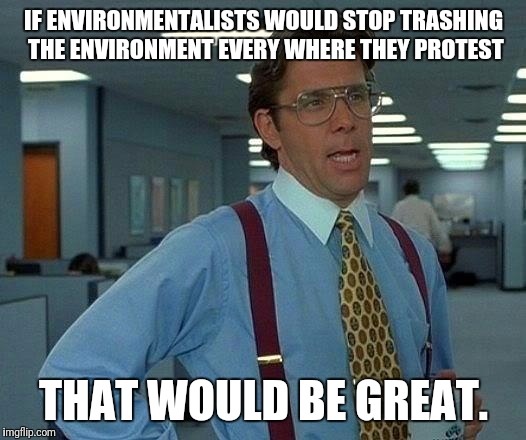
And this includes people that pretend to be ‘woke’ or think they know about the environment, and go around preaching to people what they should be doing, yet they themselves are as guilty as the rest of us.
Now of course, protesting and discussing environmental issues is important, and it has shown to be effective at different times throughout history, but a lot of people today are simply fed up by protesters. People don’t want to listen to what protesters protest.
So, to educate people better we need to think of alternative ways to reach the average person….. oh wait people have already done that with movements like Who Gives a Crap and Straw No More, as well as informative programs like the ABC’s War on Waste.
It is really that simple…. and can it be that simple for wastewater?
Analysing why these initiatives work
Can environmental outcomes be effectively achieved through a clever social media campaign, social innovation or marketing approach? Well the aforementioned examples are just that: examples! Environmental outcomes CAN be achieved.
People need to be educated on environmental matters, not because they’re difficult to understand but because helping the environment can change our daily, normal lives which (on average) has a negative impact on the environment.
We use mobile phones all the time – NOT good for the environment.
We use cars all the time – NOT good for the environment.
We use electricity all the time – NOT good for the environment.
You get the idea. But most people don’t want to change their ways, which is honestly fair enough – I wouldn’t like people coming up to me telling me to do things differently. We need to take a different approach as we’re all in this together.
In the War on Waste, they show a Melbourne tram (coffee capital of Australia) filled with 50,000 coffee cups, which are thrown-away EVERY 30 minutes. It SHOWS the negative impact the average person has.
But the solution is simple and easy – either (a) buy less cafe coffee, or (b) use a keep cup. Each of us can make a difference.
Similarly, Who Gives a Crap provides information about the importance of providing sanitation to third-world countries – i.e. their goal, and how you can play a part in that. How you can DO something, just by purchasing their (pretty) good quality toilet paper. They also engaged in some clever marketing, whereby Simon (one of their founders) sat on a toilet until $50,000 could be raised to begin production.
People are repelled by the idea of drinking water that has gone through our toilets. Jessica Longbottom at ABC discusses the ‘ick’ factor which the Australian public is extremely wary of when it comes to recycled wastewater, to the point that state governments are resistant to utilise it as a water source.
The re-use of ‘grey’ water (i.e. from baths/showers/washing machines etc) is already widespread, and as our population increases and our requirement for potable water follows, we will be ever more reliant on recycled water.
How do we Convince People to Love Recycled Water?
So whats the solution? Well there have been instances, including this one conducted by CBS in Hollywood:
(HINT: No one died!)
This is a pretty simple idea really, instead of telling, SHOWING (or DRINKING, in this case). And people discovered that, surprise, surprise, the water tasted fine! CBS also dropped some cold-hard facts at the end too!
This simple interaction, just a simple drink of water, allowed people to MAKE THE DECISION THEMSELVES! But something that is interesting in Australia is…. we’ve already BEEN drinking recycled wastewater!
Did anyone die? Did anyone really notice? NO! But a stigma against recycled wastewater still exists, not just in Australia, but around the globe, we just need to change it!
Now there is no one solution, but by looking at similar examples where a program or business model educated and incentivised good, sustainable practice, a solution will arise. One suggestion could be for a non-for-profit water-interested company (perhaps ‘thankyou.’?) to sell bottles of recycled water, with the profits investing in wastewater recycling and implementation of wastewater recycling technology in developing countries. Another idea could be to create a social movement to lobby the government to offer a rebate on water bills if you accept to use predominantly recycled water!
The UN would love both of these ideas too, helping to uphold their sustainability goals:
Goal 1: End Poverty
Goal 2: Zero Hunger
Goal 3: Good Health and Well-Being, and;
Goal 6: Clean Water and Sanitation
Good business model = better recycled wastewater recognition?
Do I think iniatives like the ABC’s War on Waste, or Who Gives a Crap, can advance the overall agenda of wastewater treatment and recycling? YES!
As I’ve shown, these initiatives educate people about how they operate and live, but also how anyone can help make a difference by changing something themselves or purchasing a good-quality product.
We just need some brilliant, driven minds to come up with and implement wastewater recycling marketing ideas, starting locally but potentially expanding throughout the world.
Our Australian federal government is one of the biggest pains in our collective backsides’, taking our hard earned money and seemingly wasting it. It seems that the government exists simply to make our lives more difficult…..
However, governments do provide several key services for our everyday life…. including wastewater infrastructure and management, and their upgrade and maintenance.
Regulatory framework and wastewater engineering
Firstly, what is regulatory framework? Well its defined as any laws, regulations, decrees and policies officially developed and approved by the government (Law Insider). Regulatory framework is one of the key responsibilities of the government, or well at least of a good government.
If we focus on wastewater (as I have done in my most recent blogs), just by looking up some legislation about wastewater in WA, you can see just how much there is.
Just by looking at this list you can see that the government has regulations (“guidelines”) telling us how to manage onsite wastewater systems, water holding tanks (i.e. rainwater tanks) as well as the important, obligatory health and safety guidelines.
So, is there a relationship between regulatory frameworks and wastewater engineering? Well, yes. Afterall, the government governs everything we do.
BUT, are these frameworks able to provide a solution to wastewater problems in remote areas? I’m not sure. So, heres a radical idea, lets think about some sustainable technology and development ideals from the UN, and engineering principles.
Are regulatory frameworks REALLY that important?
As usual, when it comes to ensuring the continual development of countries, the United Nations has some ideas in the form of their sustainable development goals (SDGs).
The UN outlines the importance of sanitation, and has goals, particularly in regards to developing more sustainable and long-lasting infrastructure (including wastewater) in developing nations. I think this is important too.
Water supply and wastewater management infrastructure in urban and rural areas comprises 4 major systems (Ashley & Cashman 2006):
Water abstracted for agricultural use (i.e. for irrigation and livestock).
Water resources (i.e. for human needs, mostly drinking and hygiene).
As Ashley & Cashman (2006) discuss, standards are important in assessing the demand for and state of wastewater-related infrastructure… and of course these vary worldwide. There are ever increasing standards in developed nations, but only ever bare minimum standards in under-developed or developing nations.
Now of course there can’t be a worldwide standard because every area of human habitation is different – some live in urban areas, and others rural.
Its impossible to provide a one-size-fits-all solution…. right?
Centralised vs. Decentralised
I think one problem with our traditional, centralised wastewater infrastructure is that it IS CENTRALISED. Whilst its great for serving a large number of people in an urban area, its not effective for rural/remote areas.
More than likely, rural areas will require DECENTRALISED wastewater management infrastructure.
Often its more cost-effective for the government (i.e. you, the tax-payer) and realistic for rural areas to have their own wastewater infrastructure (potable water source, piping/pumps etc and wastewater treatment facilities) (Capodaglio 2017). Also, its simple to construct a decentralised system for the local climatic, aesthetic and water quality requirements (i.e. more socially acceptable) (Sharma et al. 2012).
Lets think about a low population (>100 people) rural, agricultural community. Irrigation would be the biggest water requirement resulting in nutrient-contaminated runoff (from fertilizer), so wastewater treatment is vitally important for environment of the local area.
So whats a solution for this rural area?
‘Centralising’ a decentralised solution
Now as I have alluded to, there are a littany of different regulatory frameworks not just internationally, but also interstate in Australia. So I thought instead, lets think about an engineering perspective.
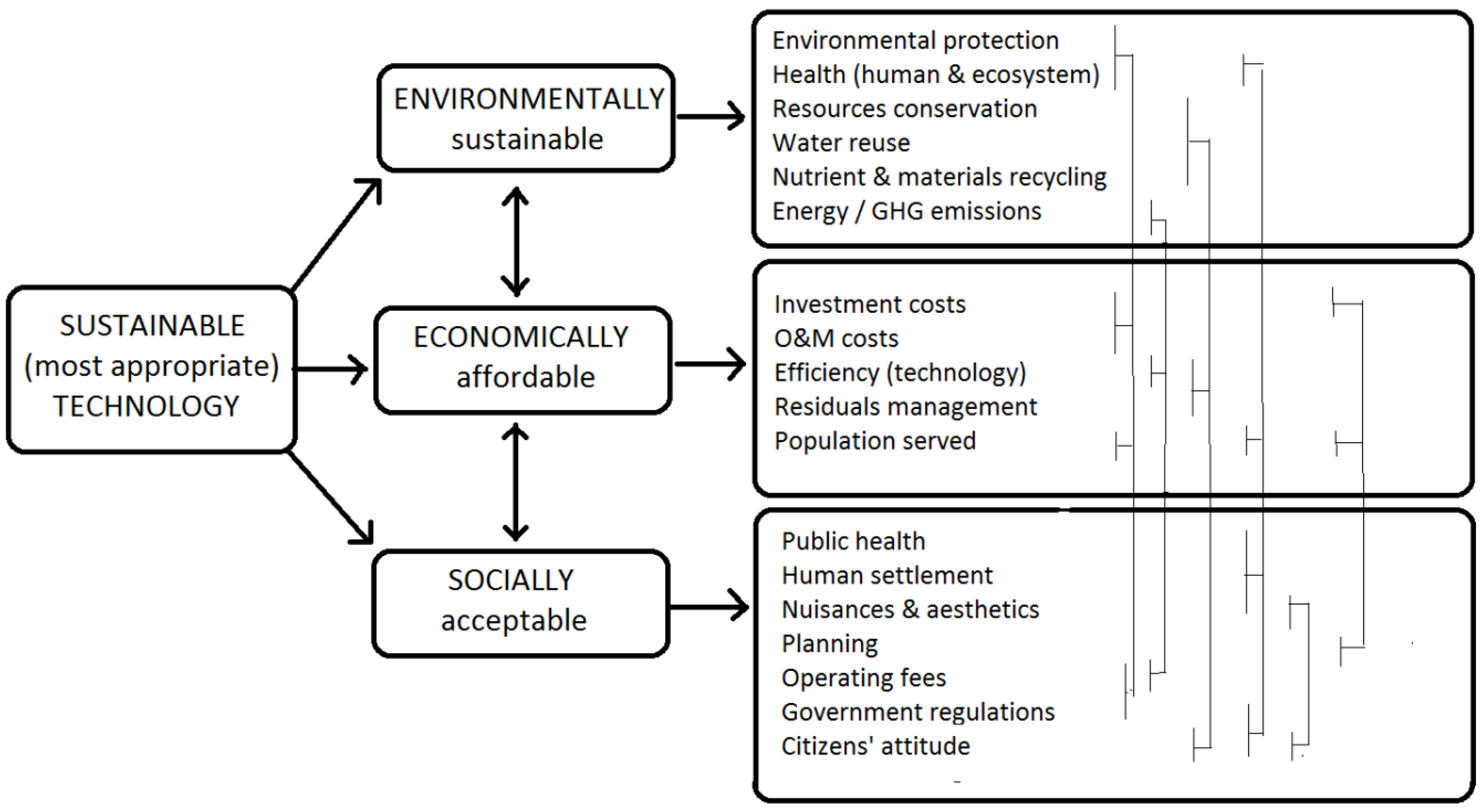
The UN’s SDG 9 focuses on sustainability, so in essence it is the same as an engineering solution, and these involve the Triple Bottom Line (TBL), which can be applied to almost any solution (i.e. ‘centralised’).
Rural infrastructure needs to be future-proof, hence it has to environmentally sustainable, economically affordable and socially acceptable. Ergo, I have the perfect smart solution to wastewater concerns of our (fictional) rural community:
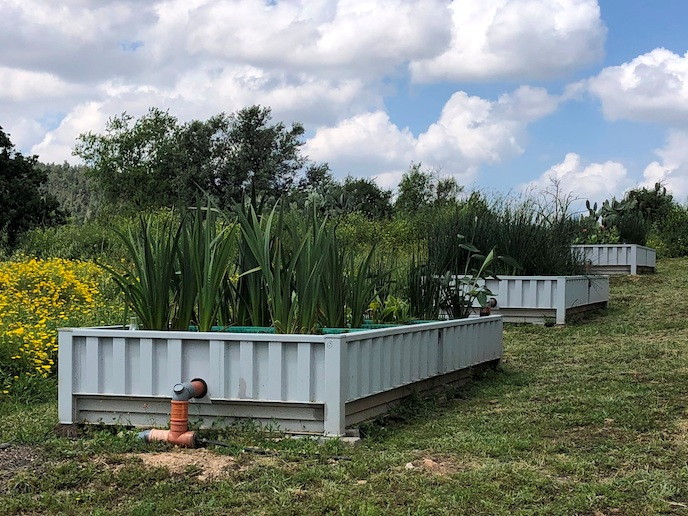
Well to be more specific, what you see above is a Portable Modular Natural Biological System (M-NBS). Here is a simple explanation for how it works: it goes in untreated, comes out treated.
As outlined by its developer, Ayala Water and Ecology, the development of this system aimed to fill a technological gap in small, rural areas where potable water sources are scarce and sewage issues are rife, where conventional decentralised systems were failing. Conventational systems fail due to compartively large operation costs and a lack of reliable electricity and skilled operations teams.
Perusing the M-NBS benefits (see here), lets see if they check all of our TBL requirements for our fictional little rural town:
Environmentally sustainable?
ECONOMICALLY affordable?
SOCIALLY acceptable?
FANTASTIC!
Time for implementation…..?
Unfortunately, we can’t begin put these solutions into practice just yet.
Rather ironically, there are a lot of government regulation hurdles for any new technology, particularly one that utilises natural processes, to overcome before it can be implemented (Schellenberg et al. 2020). First-world governments worldwide are already invested in large, established, centralised infrastructure networks, so introducing decetralised solutions will always be difficult.
However, this in a way presents an opportunity. If such solutions as the suggested M-NBS are a success, this will fling open the door for new/updated regulatory framework to allow for these ecological, decentralised solutions to be implemented.
Both basic engineering principles, and the UN’s SDGs point to a cost-effective, sustainable, decentralised solution i.e. the M-NBS, which can be tailored for anywhere and implemented anywhere, including rural or urban areas in developed or developing countries.
Electricity is (virtually) as important to people in first-world now as water and food. Whilst it powers our lights, TV’s and phone chargers, it is also vitally important in powering our largely forgotten Wastewater Infrastructure.
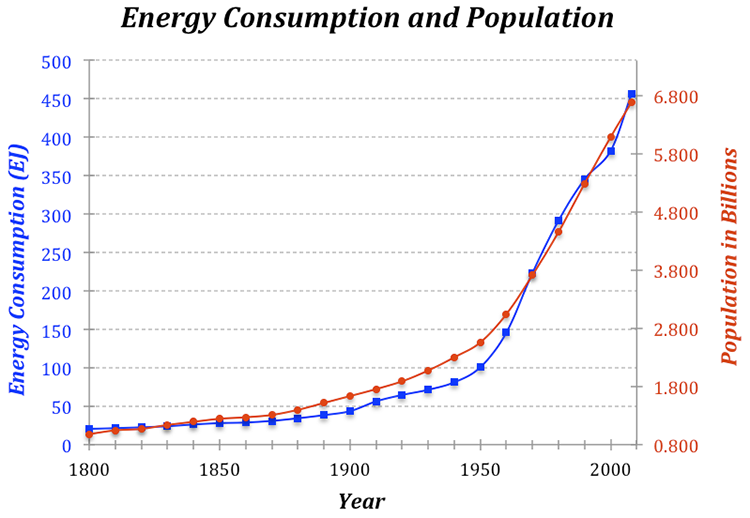
Wastewater in my opinion is our most important infrastructure resource that is taken for granted. However, you will find that municipal wastewater treatment facilities are among our greatest electricity consumers – averaging approximately 1%-3% of a country’s total electricity output (Capodaglio & Olsson 2019). And with populations ever increasing, we will need ever more electricity to power our wastewater infrastructure.
Question: Whats the answer to our electricity problem?
Climate change is arguably the biggest problem facing our current world. Its important to leave our world in good shape for our children and theirs. We need to live more sustainably.
Traditional renewables, by which I mean solar and wind power, whilst popular, cannot be relied upon to power our vital wastewater infrastructure! This is primarily due to the fact that the sun and wind are intermittent – solar panels and wind turbines cannot be generating power all the time, only when its sunny or windy respectively.
There are certain benefits to having solar/wind power sources to compliment existing sources, and I do believe that every house in Australia (depending on climate of course) should have solar panels to take advantage of our natural, renewable resources as much as possible. However, we need another, reliable, yet sustainable, general source of electricity.
This discussion gives me an idea: what if we could use our wastewater to power our wastewater infrastructure? Much like we can use our houses and their solar panels to power our household electricity?
Using Wastewater…. to Power our Wastewater Infrastructure…..???
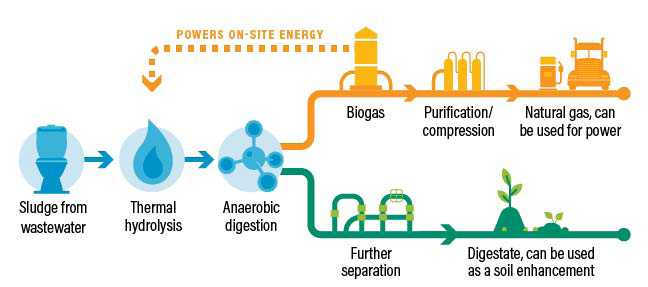
Wastewater, and its byproducts contain sources of energy in several forms i.e. chemical, thermal and potential (Capodaglio & Olsson 2019). Wastewater sludge is one of those byproducts. Anerobic digestion (a natural process) converts the organics present in the wastewater into biogas, which in turn can be used to generate electricity (Australia Water Association 2020).
Another benefit of this solution is that it doesn’t have to be centralised. Anaerobic treatment with biogas production for electricity is an effective, realistically implementable local solution for industrial sites and farms too! This allows for effective management of wastewater, and a sustainable production of electricity which can reduce operating costs (Sustainability Matters 2019). I think this is a BRILLIANT solution.
Many wastewater treatment plants (WWTPs) around the world have already turned to aerobic digestion to produce biogas for electricity production! For instance, the Glenelg Wastewater Treatment Plant in South Australia already has 74% of its electricity needs produced by its own, wastewater sludge generated biogas (Australian Water Associated 2020).
The economic viability of this method of energy production is fantastic! Wastewater treatment is a very expensive process, but approximately 30% of the cost is for the electricity to power it (Water Online 2018). Hence, effectively using the same process to produce its own power is not only sustainable, but also economically viable!
We need to think about the Future!
Our populations are ever increasing, and thus its important to acknowledge that our WWTPs must prepare for this increased demand. With increased wastewater ‘traffic’, and the potential of unknown-future constituents of concern, the requirement for electricity to power our wastewater infrastructure is ever increasing. Hence, we need to be prepared.
Thermal energy (biogas) production contained in wastewater is already in-use today, and whilst this should be expanded to more WWTPs, their should also be a greater focus on the utilisation of energy stored in carbon compounds (Schaum 2018). One such innovation planned is the Microbial Fuel Cell, which turns bacteria found in wastewater into electricity!
It is also hoped that the fuel cell can be improved to produce electricity on an ever increasing scale.
In the future it is believed that WWTPs will expand their scope from just wastewater treatment to become system service providers, entailing wastewater treatment, production of electricity, potable water provision and the ability to manufacture fertilizer (for food production). It will envelope the most vital ingredients of our human society (Schaum 2018).
Its important to invest in this infrastructure sooner, rather than later
Given our current (and predicted future) vulnerability to climate change, we need to be proactive, not reactive, when it comes to planning for our future infrastructure and electricity requirements.
The UN’s Sustainability Goal 9: Industry, innovation and infrastructure discusses the importance to plan for a sustainable future, by acknowledging the increase demands that comes with increased population, by finding a technogical solution that is sustainable, both environmentally and economically.
Enter wastewater energy production! It fits all the criteria. Using wastewater to produce electricity takes advantage of an almost endless supply of potential electricity (people will always produce), and has been found to be very cost-effective! There are existing solutions that also allow for the more sustinable, local production of electricity from wastewater (anaerobic digestion). This is also in-line with UN’s sustainable development goal of building resilient infrastructure and promoting sustainable industrialisation.
We need more efficient, cheaper and effective innovative ways to produce electricity to power our ever increasing requirement for wastewater treatment and infrastructure. And if we’re fortunate and creative, wastewater can also provide the foundation which provides our future generations, not only with wastewater services, but also electricity, clean water and the ability to aid food production.
The innovation and technology is already (or almost) here. We just need to implement it.
Before we get started, please watch this teaser VLOG to get you amped up for what I am about to discuss……
Wastewater is one of the critical parts of our first-world civilisations – but it is often overlooked. There are certain things the average person simply doesn’t think about – Wastewater treatment and management is one of those things. Wastewater, after treatment, is very valuable as a potential source of potable water, particularly in arid/semi-arid countries that often struggle with sourcing water (hint: including AUSTRALIA) (Pescod 1992).
Constituents in wastewater can be varied, often depending on the location i.e. more heavy metals can be sourced from power stations, heavy industry or mining, and similarly high levels of nutrients (phosphorous and nitrogen) are a result of fertilizer usage from agriculture (Tchounwou et al. 2014). These constituents and others – coined as ‘Constituents of Concern’, are harmful to the environment and are also a challenge for the wastewater treatment process (Water Corp 2020).
However, there is one critical constituent of concern that has arisen more in recent years – Microplastics.
Forever Taken for Granted
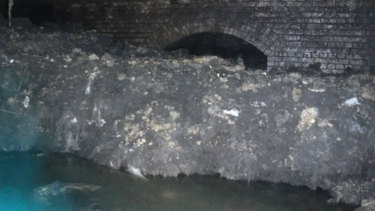
The problem with wastewater and its treatment, at least in a first-world country like Australia, is that people take it for granted. People simply don’t acknowledge how important it is and have taken to flushing things that shouldn’t be disposed in a toilet or kitchen sink. Some examples include cooking grease and fat and common hygiene products (i.e. baby/wet wipes, tampons, Q-tips, cotton buds & dental floss) – seriously come on guys! Of course, there are some even stranger items, including cigarette butts, condoms or illicit drugs!
Also, you may be shocked to discover that even products which advertise their ‘flushability’ aren’t actually suitable to be flushed down…. Its best to think about what you’re flushing in the first place.
Not only do the aforementioned unflushable (and ‘flushable’) items impact wastewater treatment methods and their effectiveness, but they’re also bad for the environment, directly and indirectly. Treating the more difficult items, and removing unwanted materials requires more electricity (Maktabifard, Zaborowska & Makinia 2018) – which isn’t good for the environment, as we know.
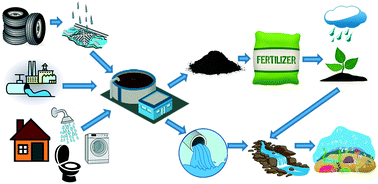
However, what is more unknown is that wastewater treatment plants are a huge source of microplastics – bad for the environment. Microplastics, in the form of microbeads are designed for use in cosmetics, and for medicinal and industrial purposes, which are either washed down a sink, or runoff into wastewater drains and gutters. Microplastics are also born from the fragmentation of larger plastic products caused by the sun, wind, water, or other means, as they’re deposited in landfills or littered (Conley et al. 2019).
Microplastics are one of the largest effects our modern society has on the environment at this current time. These tiny plastic fragments have the potential to release harmful pollutants and chemicals to flora, and fauna (once ingested), particularly in aquatic environments. Large numbers of marine life, including fish and turtles (and subsequently their predators) ingest these little, un-break-down-able, plastic devils. It would surely be dangerous to any species who eat aquatic life…….. oh wait.
Someone should do something about this!!!!!!!……?……
There is no question that this is a problem of our own making. To overcome problems like this and the others that plague our modern world, the United Nations have listed 17 Sustainable Development Goals (SDG’s). These are based on the principle of not leaving anyone behind – something I believe we should all support. Amongst these include goals based on climate action, reduced inequality and the irradication of poverty, however the one critical goal relevant for this rant… oh sorry “discussion” is SDG 6: Clean Water and Sanitation.
The basic idea behind this goal is that everyone has the right to clean water and sanitation. The one key target is that by 2030, the aim is to considerably increase water quality to increase how much wastewater can successfully be treated, by reducing pollution, dumping of rubbish, and the general release of hazardous chemicals and materials. This will supposedly halve the amount of untreated wastewater.
….and that someone is you, and me… and everyone!
I thoroughly believe that we as individuals have a greater power over making the world more sustainable than we may think.
To help achieve SDG 6 we need to reduce the amount of rubbish that litters our waterways and bodies, hence we will be able to treat water more effectively (and use less electricity!!!). But where do a lot of these contaminants come from? Manufacturing! The big companies (Apple, Samsung, automotive companies etc) often produce their products in developing countries with cheaper labour costs. This makes treating wastewater even more difficult there, which is the UN’s goal – to improve the ability of effective wastewater treatment in developing countries.
Of course, these companies can alter their standards to reduce harmful wastewater runoff, or at least improve the runoff quality – they need to play their part as well! However, consumers (i.e. us, in the western, developed world) buy these products. Hence, by consuming less we are reducing the amount produced (demand vs. supply) and the amount of wastewater pollution, allowing for easier and more effective treatment!
We can also make changes at home too! Properly disposing of our used products will reduce the amount of constituents of concern (including MICROPLASTICS) going into our environment, either via wastewater treatment plants or runoff. To properly manage microplastic contamination in water bodies and streams, efforts should focus on a diverse range of microplastic sources (UN Environment Programme 2018).
If we make even a few minor changes to our everyday life, we can make the world more sustainable. Together we can make a difference!
References:
Conley, K., Clum, A., Deepe, J., Lane, H. and Beckingham, B., 2019. Wastewater treatment plants as a source of microplastics to an urban estuary: Removal efficiencies and loading per capita over one year. Water Research X, 3.
Maktabifard, M., Zaborowska, E. and Makinia, J., 2018. Achieving energy neutrality in wastewater treatment plants through energy savings and enhancing renewable energy production. Reviews in Environmental Science and Bio/Technology, 17(4), pp.655-689.
Pescod, M., 1992. Wastewater Treatment And Use In Agriculture. Rome: Food and Agriculture Organisation of the United Nations.
A little summary and taste of whats to come! (source)
Do you want improved water quality? Well I’ve got the solution for you!
‘What if?’ is a very powerful question. It spawns countless thoughts of limitless potential, pushing the boundaries of our human imaginations. Once people realise the potential of this thought process, perhaps humans could evolve even further. However, I am going onto a little bit of a tangent.
The ‘What if?’ scenario I want to explore today is simply: what if more floating wetlands were deployed into water bodies facing water quality issues. Floating wetlands have already been deployed into many different areas, such as ponds and lakes, facing issues with water quality, and favourable results have been found!
I will develop a business case to convince you (assuming you’re either a member of local, state or federal government (a policy maker), or a company/project needing to alleviate contamination) that floating wetlands are something that are not only beneficial, but also cost effective.
I will focus on a couple of locations in Perth where floating wetlands have been implemented to great effect as an example (as I do live in Perth). I will also provide an example from a city overseas, as well a relatively large scale residential project in Queensland.
But first, before I explain what on god’s green Earth a ‘Floating Wetland’ is, you might be asking, what exactly IS a wetland and does it do?
What are wetlands and what’s wrong with them?
We all have a basic understanding of what a wetland, but I will confirm it for you. Put very very simply, a wetland is an area where water covers the soil (source). They are transition zones between aquatic and land systems, and come in many different sizes from one acre to thousands of them (source). There are several different types of wetlands, including (source):
Swamps and marshes.
Billabongs, lakes and lagoons.
Saltmarshes and mudflats.
Mangroves and coral reefs.
Bogs, fens are peatlands.
“WHAT ARE YOU DOING IN MY SWAMP?!” “I’m sorry sir, but a swamp like yours is a rare sight to see” Quote from the future film: ‘Shrek: Remastered’ This just one example of a wetland, a marsh (source)
Wetlands are disappearing everywhere (Australia included) as a direct result of anthropogenic activities, whether that be agriculture, various industry, urbanisation and increased urban sprawl, or increased population density (source). Because there are so many ways our wetlands are negatively affected (mainly people – where’s Thanos when you need him), wetland degradation is something that is difficult to mitigate, and things aren’t looking so great at the moment (source).
Now, whilst this blog isn’t about the degradation of wetlands, I just wanted to give you readers a brief education on the topic. However, rather ironically, the degradation of wetlands has allowed us to realise their importance and that we have taken them for granted. This has lead the potential for floating wetlands to be deployed far more widely!
What do wetlands do and why are they so important?
Wetlands are an essential part of our environment as they’re one of Earth’s most productive ecosystems (source). A great number of species of microbes, plants, amphibians, reptiles, birds, fish and mammals rely on wetlands in one way, shape or form (source).
Aside from the incredible benefit to wildlife and the environment, wetlands also benefit people. Wetlands play an invaluable role as the ‘kidneys’ of the environment and maintaining the vital ecological service functions (source). Wetlands provide natural water quality management primarily by absorbing pollutants, including nutrients. Suspended sediments in the water are trapped in wetlands, which reduces the turbidity of the water. Turbidity has been implicated in the cause of outbreak of many diseases that can be found in drinking water (source).
I hope you now understand what a wetland is, and that they’re very important for our environment. So, now what’s a floating wetland?
So, what is a floating wetland and what does it do?
As I touched on, wetlands have been used for bioremediation to remove contaminants and nutrients around the world to great effect. Wetlands can improve the water quality of stormwater runoff and manage catchment nutrients, and are also great for the treatment of wastewater and other industrial pollutants (source).
Floating wetlands, or otherwise known as ‘floating treatment wetlands’ (or FTWs) or ‘floating treatment islands’, allow for the emergence of aquatic plants in water that would otherwise be too deep for them to grow (source).
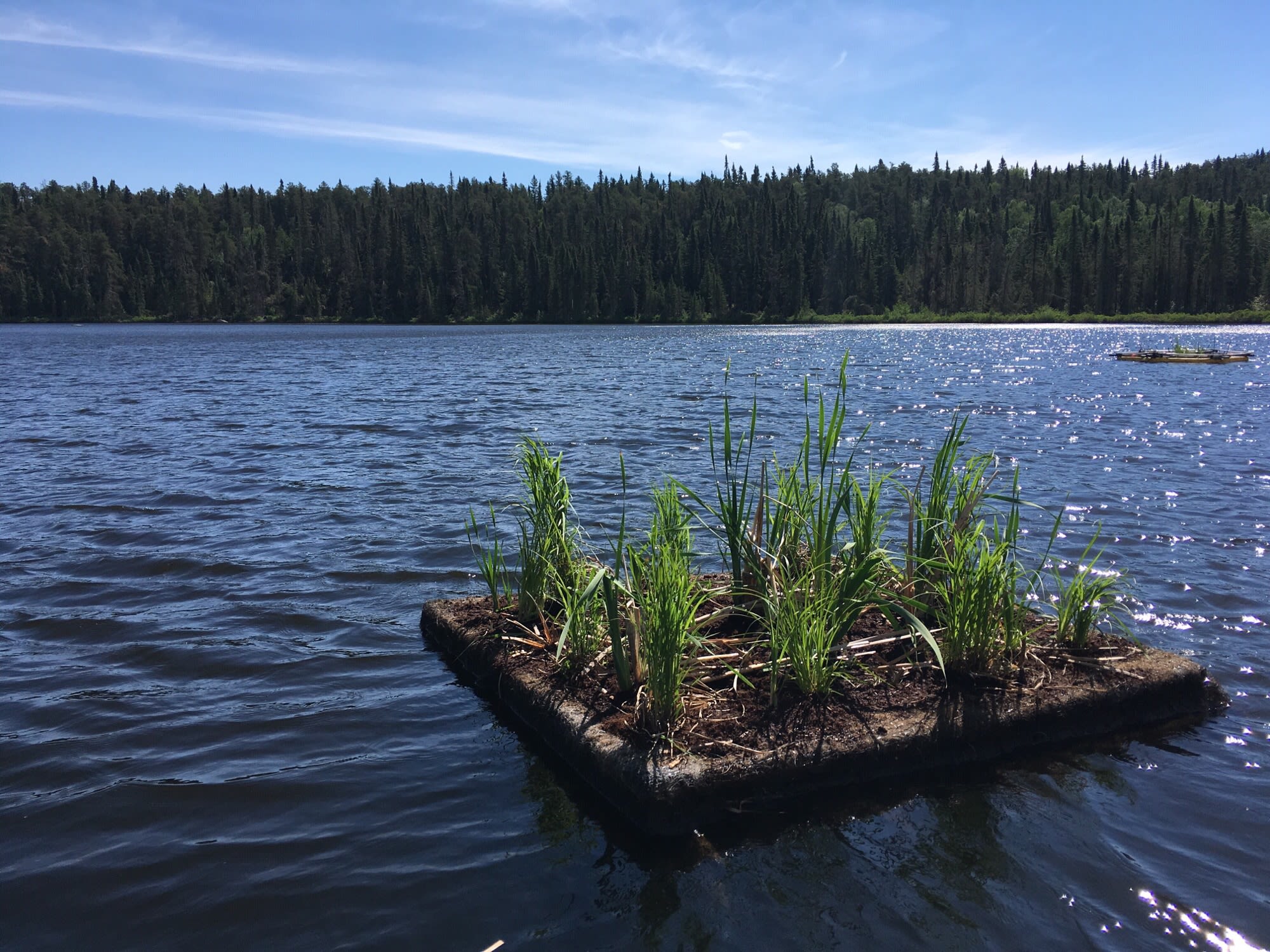
Now, while the picture above might simply look like some bloke grabbed a piece of foam, painted it a dark colour, threw on some soil, stuck on some plants and floated it into the middle of a lake, I can assure you FTWs are a lot more complex than that.
FTWs are often constructed with a buoyant foam combined with a combination of fiborous and porous materials. This allows the platform to float and allows plants to grow through the water column, as well as function as a ‘high surface area substratum’ that provides a suitable habitat for microbes (source).
Plant roots play a significant role in treatment processes within FTWs. As the water passes directly underneath the floating wetland and through it’s extensive root system, the roots release enzymes, develop extensive biofilms and also instigate flocculation of suspended matter at the surface of the submerged plant organs (source).
Floating wetlands can be integrated together to create a larger wetland system.
A broader diagram of how a floating wetland can integrate into a larger wetland system (source)
FTWs are great because they perform their intended purpose to do the same things that wetlands do. This is critical for some environments that are ravaged with agricultural/industrial pollutants or wastewater, amongst other water quality issues (source).
There are some design requirements for FTWs. They can only be utilised effectively in water approximately 0.8 – 1.5m deep, and protection is required from animals such as turtles, birds or other animals that would eat the plants, as well as large animals that could damage the platform (such as crocodiles) to ensure their sustainability (source).
Maintence of FTWs is typically extremely cost effective compared to other solutions, as well as having very little or no energy and operating costs (source). Another benefit is that floating wetlands can be deployed very quickly, compared to other more engineered solutions which could take up to one-year to implement (source).
However, whilst they’re good for the intended purpose I’m discussing, they cannot be used as a natural flood protection method as they lack the required soil structure which is present in natural and even artificial wetlands. I will discuss cost comparisons to artificial wetlands (which are also good) in further detail later.
So, do they work?
FTWs have seen considerable success in several different scenarios around Perth, around Australia and in other parts of the world.
Floating wetlands first appeared in Australia approximately 14 years ago, having originated in the US (source). In Perth, the City of Swan deployed FTW’s in Ballajura’s Emu Lake to improve water quality (source). The lake suffered from phosphate pollutants, and the offered solutions were expensive. Floating wetlands were installed as they were more cost-effective and much faster to implement. It was found that 2-3 years since the floating wetlands were installed the pollutant concentration dipped considerably, to about 10% of what they originally were (i.e. a 90% decrease in concentration levels) (source).
Installing FTWs at Brickworks Lake in Maylands (source)
In 2017, the City of Bayswater also elected to utilise floating wetlands to improve water quality and address algal blooms in Bungana, Brearley and Brickworks lakes. Ecocraft Environmental, free of charge, kayaked out some of their floating wetlands and installed the required moorings. This was done after february storms (which brought an influx of nutrients through stormwater runoff) and it was intended that installing floating wetlands would alleviate these issues (source).
There are stories of success that exist in other parts of Australia as well. Parklakes 2 was a residential development project in Bli Bli on the Sunshine Coast in Queensland, completed in 2015 (source). The construction of an artificial wetland to treat the stormwater runoff from Parklakes 2, was initially planned at significant cost. However, it was found that the actual water quality improvements could not be assessed until the project was approximately 60% complete (source).
It was proposed that instead of constructing a wetland, a lake would be constructed and a 2100 square-metre floating wetland treatment system (FWTS) would be installed. After construction cost comparisons were undertaken, it was found that using this FWTS would produce savings of almost $1 million (source)! The other benefit would be that, as the FWTS would be operational in a shorter amount of time, its effect on the water quality could be assessed earlier (source). This particular FTW application has become famous around the world as a result of its success. The added effect of aiding the cooling of the housing estate was also found, as Parklakes 2 now had three lakes, instead of two (source).
The Parklakes 2 resedential development project is a FANTASTIC example of the benefits of using floating treatment wetland technology. Not only did the floating wetland application reduce costs considerably (~$1 MILLION) and more importantly reduce the stormwater contamination, it also provided a social benefit of greater water surface area, aiding the cooling of the residential estate (source). These benefits fit into the three key aspects of the Triple Bottom Line – Economic, Environment and Social. For this particular scenario, its a perfect engineering solution!
If you want another example, the use of floating wetlands have also seen success in Johannesburg, South Africa. It is city that can be characterised by gold mining and various industrial activities (source). To briefly summarise the results from tests in the city, it was found that water quality was enhanced and biodiversity was also improved (source).
What’s this business case you talked about?
Well, I’m going to assume that someone who reads this blog (i.e. you) is a decision maker, whether thats a policy maker (member of local, state or federal government) or a project manager or any other form of decision maker that requires the improvement of the water quality of a body of water. I am addressing you.
You might have guessed that this blog has been advocating for the use of floating wetlands, and they sound great, right?! I think they sound great too. But what’s even more impressive is that they’re not only effective at dealing with issues regarding water quality, they are also cost effective, at least compared to similar options.
As was found with the Parklakes 2 project, the use of floating wetlands as opposed to the construction of an artificial wetland, saved approximately $1 million. It was also found to be very effective in treating the stormwater that would regularly flow into the lake. Other examples, such as in Ballajura’s Emu Lake, found that the floating wetlands considerably reduced the contaminant levels. Local councils have found that FTWs are very popular amongst residents due to their aesthetically pleasing natural appearance, as well as their fast instalment time (and more costly) solutions (source).
Floating wetlands for use in water bodies with existing contamination and pollution concerns, as well as preventative measures for contamination in future projects is ideal. This is because (source):
They’re effective.
They’re cheaper than alternatives.
They’re popular amongst the public.
Do you really need anything else? What are you waiting for, go get them!
So, ‘what if’ floating wetlands?
To re-visit the topic of this blog, I will summarise: what if we implement more floating wetlands in water bodies with water quality issues?
If you implement floating wetlands into your lake with water quality issues, it will be effective and it will be more cost effective. Deploying more floating wetlands will only help our environment, making it extremely beneficial.
If you are interested in first listening to my beautiful speaking voice, and get the gist of what I’m trying to say, rather than reading my whole blog, watch my 2:27 vlog here.
Our Broken World
What has our world come to. Our environment seems to be decaying around us yet our desire (or need, depending on who you ask) for products – i.e. clothing or electronics, still remains. It is this protection of consumer interests – consumerism, that maintains the endangerment of our environment.
You may be asking, as you grab your torch and pitchfork, who is at fault for this consumerism? Is it the manufacturer that produces the most and pollutes the most? Is it the resources companies that mine the raw production materials? Is it my neighbour Terry? Or is it you, the confused reader? The answer to these questions, may shock you, so don’t assign your blame just yet.
If a person doesn’t want to take responsibility for the consequences of their actions, they may try to blame others. Don’t accept blame or try to fix things for them when you’ve done nothing wrong. They need to learn that if they want different outcomes, they will have to make difference choices. — Doe Zantamata
Sadly, this is not really an uncommon sight at the beach (Roberts 2018).
Theres probably a sight like this somewhere near where you live (Patterson 2019).
This is our world now. Pollution. Our already fragile ecosystem brought to its knees by the greed of human beings, a species blessed with the ability to create and think differently than other mammals, yet destroying their habitat. Its insane. However, just as humans evolved and began to industrialise in the late 18th and 19th centuries, humans have now evolved to realise that the way we makes things has to change. This brings me to Ecological Engineering, which is described by Mitsch (2012) as ‘the design of sustainable ecosystems that integrate human society with its natural environment for the benefit of both’. Ecological engineering can be adopted by every type of engineering, be it Electrical, Mechanical, Civil or even Software engineering.
So what can we do? How can we use ecological engineering to sustain our environment into the future? Hopefully as you read further I can make you understand what I think is wrong with this world, and how we can make this world a better place together.
The Concept of Ecotechnology
There are 19 princples of ecological engineering (see below), of these, No. 18 is the one I want to focus on.
Ecological Design Principles as outlined by Mitch & Jorgensen (2004)
Ecotechnology is defined by Straškraba (1993) as ‘the use of technological means for ecosystem management based on deep understanding of principles on which natural ecological systems are built and on the transfer of such principles into ecosystem management in a way to minimize the costs of the measures and their harm to the global environment’. To put it more simply, ‘ecotechnology is an applied knowledge and skill that searches for accomplishing human needs with minimal ecological disruption, by binding and subtly maneuvering natural forces to leverage their beneficial effect’ (source). Ecotechnology is something that we should focus on when designing anything in the future.
Principle No. 18 states that ‘ecotechnology requires a holistic approach that intergrates all interacting parts and processes as far as possible’. This means that an ecosystem is a more than the sum of its parts, you have to look at the ecosystem as a whole (including humans) to be able to use the concept of ecotechnology effectively. Its important to acknowledge the three axioms of designing complex systems (like ecosystem services) (source):
Everything is connected.
Everything is changing.
We are all in this together.
As I eluded to initially, there are many ways in which the products that people purchase have a negative effect on our environment. Lets use an example of something that no first-world adult person can live without – a smartphone.
Basic overview of smartphone production cycle (source).
The materials to manufacture your average smartphone include resources such as gold, silver and copper (for wiring), aluminium alloys (for lightweight phone casing), and finally elements such as lithium which are needed for the battery (source). The mining of these materials has a detrimental effect on the environment, even if government environmental standards are met. Approximately 85% of greenhouse gas emissions occur during the manufacturing stage (source) as, in Australia for example, most electricity is still sourced from fossil fuels – coal, oil and gas (source). Fuel is also required for transportation from the factory to the retailer, often by ship and/or truck. Your (now) old phone also contributes to electronic waste which has the potential to leak pollutants, which can seep into groundwater, contaminating it (source).
So when you buy a product, you have to think; where did it come from? What is it made of? How did it get here? Wheres my old one going? It cost me a lot of money, but how much did it ‘cost’ the planet? For our implementation of ecotechnology to improve, we need to think of what we buy and how/where it was manfactured, and the other facets of its production. People need to understand that each of us is responsible, even in a small way. Buying less disposable, replaceable products (including smartphones) will have a major impact on our environmental footprint.
So, whose fault is it?
I used to go to University with someone and she ‘felt strongly’ about the environment, and would often go to environmental protests (typically against mining operations), trying to make a difference. However, she also would buy the brand new iPhone every year, I know because she proudly announced it to myself and other fellow students. She didn’t even acknowledge that the product she purchase is made from mined resources. She was ignorant, but was claiming that mining companies (sometimes the government) were as well, she was a hypocrite. Although most people have a mentality where they consider their own environmental impact, we need to make sure more people to do the same.
So how did the environment get to the state that it is in today? Surely it can’t have always been this bad. It is believed that as the industrial revolution began in the 18th century, people got used to the comforts which were then newly available, marking the end of sustainable living (source). As industrialisation boomed, so began the process of globalisation, linking people worldwide by trade and technology, which has since become a key dynamic in the modern world marketplace and corporate development (source). One problem with globalisation from an environmental perspective, is the increase in market competition between manufacters, leading to consumerism. Price wars ensued, with prices dropping lower and lower, allowing more consumers to buy more goods, increasing the already intense strain on the environment due to an increased demand for raw materials and resources (McAusland 2008).
The physical transport of goods worldwide also brought considerable emissions and need for fuel, directly impacting the environment (McAusland 2008). This is the world we live in today, more globalised than ever before, and it will continue to become more interconnected, with goods becoming even cheaper and more accessible.
So, back to the initial question, whose fault is it? The resources companies who provide the materials for production? The manufacturers who create the demand for the materials and produce the products? Or the consumer, who creates a demand for manufactured goods? The answer is simple, its everyone’s fault, but it really doesn’t matter anymore. My university colleague wouldn’t be a hypocrite if she said the things she did but lived with absolutely no environmental footprint. Its great to protest and voice your opinion on something you really care about, but you should hold youself to the same values that you preach. If people didn’t buy smartphones (or any product, a smartphone is just something most people own), there wouldn’t be demand for these resources, and mining wouldn’t be nearly as much of an issue. But thats fantasy, not the real world. ‘Climate change is deeply and ineradicably systemic’, its a part of everything that humans do (source).
The point I’m trying to emphasise is that a change in mentality is needed. We need to have an ‘Ecomentality’. Turn the lights off at home when you’re not in the room. Put on a jumper instead of putting on a heater when you’re cold. Have a 3-4 minute shower, not a 6-8 minute one. Drive more economically. There is evidence to suggest that someone with a pro-environmental mindset (one who thinks about their daily environmental impact) will, unsurprisingly, behave in an ecologically sustainable way (Moser & Kleinhückelkotten 2017). I believe that once people are more aware of the difference they can make on their own, their mentality will change.
Whilst its found that people can improve their environmental footprint by being more ecologically in-tune, manufacturers and resources/mining companies can make a significant difference as well. By ensuring that their environmental footprint is as important to consider as their impact on the community and their profit margins (Triple Bottom Line), these companies can make a difference. Alcoa of Australia is a good example of a resources company trying to do the right thing. Alcoa has a model rehabilitation plan as they seek to ‘re-establish a self-sustaining jarrah forest ecosystem’ at their bauxite mining operation in the jarrah forest near Pinjarra (source).
Who else can make a difference?
People and industry are not the only ones responsible, governments and policy makers are also accountable. Governments should encourage people to save energy and water, and spread awareness about the small changes everyone can make over digital and social media. Governments also need to ensure that there is adequately tough environmental laws to protect against potential environmental harm. In Australia since 1999 the Environmental Protection and Biodiversity Act has in place, whereby its an offence for ‘any person to take action that is likely to have a significant impact on matters protected by the Act’ (source).
Another example of good political action is the Paris Agreement. Countries that signed up have commited to reducing this centuries global temperature rise to no more than 2 degrees celcius (1.5 degrees is the target) (source). Most major nations around the world have come together (although some have since elected to pull out *cough* United States *cough* *cough*), to strengthen the global response to climate change.
Timeline of some of the effects of the Paris Agreement (source)
From the timeline you see a significant impact already, particularly where 25% of European countries have ‘quit’ coal, China has reached its coal ‘peak’ and finally that Costa Rica, a country of almost 5 million people, was fossil fuel-free for 2 months. Foreign nations and leaders are starting to improve their environmental impact, this is another sign that things will get better!
Wrapping up a rant….
Blaming others will not get you anywhere, irrespective of what task your attempting to complete, especially when you yourself are not free from fault. Everyone is guilty of mistreating the environment in some small way. It might seem insignificant at the time, but those little mistreatments add up.
Ecotechnology is something that is needed now and into the future. However, it requires a holistic approach, we have to consider every part of the ecosystem for it work, that includes the miners, the manufacturers, policy makers (governments) and the consumer – EVERYONE. Once the mentality of everyone on Earth has changed, things will improve. Its clear however, that governments worldwide are trying to make a difference! This will change peoples lifestyles in first-world countries, and combined with (hopefully) stricter environmental laws in the future, design processes will be primarily concerned with the environment. Ecomentality is vital for the continuity of our planet and our society, and its catching on, even if its only bit by bit.
If you want to read up some more about how you can make a difference, have a read here.


















 Ecomentality