Before we get started heres a little teaser….
Electricity is (virtually) as important to people in first-world now as water and food. Whilst it powers our lights, TV’s and phone chargers, it is also vitally important in powering our largely forgotten Wastewater Infrastructure.
Wastewater in my opinion is our most important infrastructure resource that is taken for granted. However, you will find that municipal wastewater treatment facilities are among our greatest electricity consumers – averaging approximately 1%-3% of a country’s total electricity output (Capodaglio & Olsson 2019). And with populations ever increasing, we will need ever more electricity to power our wastewater infrastructure.
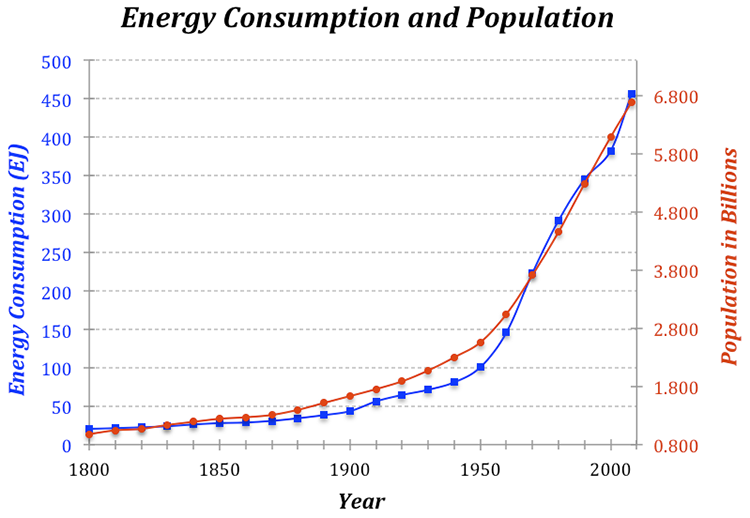
Question: Whats the answer to our electricity problem?
Climate change is arguably the biggest problem facing our current world. Its important to leave our world in good shape for our children and theirs. We need to live more sustainably.
Traditional renewables, by which I mean solar and wind power, whilst popular, cannot be relied upon to power our vital wastewater infrastructure! This is primarily due to the fact that the sun and wind are intermittent – solar panels and wind turbines cannot be generating power all the time, only when its sunny or windy respectively.

There are certain benefits to having solar/wind power sources to compliment existing sources, and I do believe that every house in Australia (depending on climate of course) should have solar panels to take advantage of our natural, renewable resources as much as possible. However, we need another, reliable, yet sustainable, general source of electricity.
This discussion gives me an idea: what if we could use our wastewater to power our wastewater infrastructure? Much like we can use our houses and their solar panels to power our household electricity?
Using Wastewater…. to Power our Wastewater Infrastructure…..???
Wastewater, and its byproducts contain sources of energy in several forms i.e. chemical, thermal and potential (Capodaglio & Olsson 2019). Wastewater sludge is one of those byproducts. Anerobic digestion (a natural process) converts the organics present in the wastewater into biogas, which in turn can be used to generate electricity (Australia Water Association 2020).
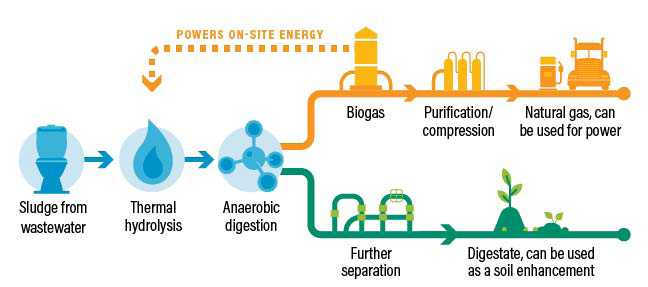
Another benefit of this solution is that it doesn’t have to be centralised. Anaerobic treatment with biogas production for electricity is an effective, realistically implementable local solution for industrial sites and farms too! This allows for effective management of wastewater, and a sustainable production of electricity which can reduce operating costs (Sustainability Matters 2019). I think this is a BRILLIANT solution.
Many wastewater treatment plants (WWTPs) around the world have already turned to aerobic digestion to produce biogas for electricity production! For instance, the Glenelg Wastewater Treatment Plant in South Australia already has 74% of its electricity needs produced by its own, wastewater sludge generated biogas (Australian Water Associated 2020).
The economic viability of this method of energy production is fantastic! Wastewater treatment is a very expensive process, but approximately 30% of the cost is for the electricity to power it (Water Online 2018). Hence, effectively using the same process to produce its own power is not only sustainable, but also economically viable!
We need to think about the Future!
Our populations are ever increasing, and thus its important to acknowledge that our WWTPs must prepare for this increased demand. With increased wastewater ‘traffic’, and the potential of unknown-future constituents of concern, the requirement for electricity to power our wastewater infrastructure is ever increasing. Hence, we need to be prepared.
Thermal energy (biogas) production contained in wastewater is already in-use today, and whilst this should be expanded to more WWTPs, their should also be a greater focus on the utilisation of energy stored in carbon compounds (Schaum 2018). One such innovation planned is the Microbial Fuel Cell, which turns bacteria found in wastewater into electricity!

It is also hoped that the fuel cell can be improved to produce electricity on an ever increasing scale.
In the future it is believed that WWTPs will expand their scope from just wastewater treatment to become system service providers, entailing wastewater treatment, production of electricity, potable water provision and the ability to manufacture fertilizer (for food production). It will envelope the most vital ingredients of our human society (Schaum 2018).
Its important to invest in this infrastructure sooner, rather than later
Given our current (and predicted future) vulnerability to climate change, we need to be proactive, not reactive, when it comes to planning for our future infrastructure and electricity requirements.

The UN’s Sustainability Goal 9: Industry, innovation and infrastructure discusses the importance to plan for a sustainable future, by acknowledging the increase demands that comes with increased population, by finding a technogical solution that is sustainable, both environmentally and economically.
Enter wastewater energy production! It fits all the criteria. Using wastewater to produce electricity takes advantage of an almost endless supply of potential electricity (people will always produce), and has been found to be very cost-effective! There are existing solutions that also allow for the more sustinable, local production of electricity from wastewater (anaerobic digestion). This is also in-line with UN’s sustainable development goal of building resilient infrastructure and promoting sustainable industrialisation.
We need more efficient, cheaper and effective innovative ways to produce electricity to power our ever increasing requirement for wastewater treatment and infrastructure. And if we’re fortunate and creative, wastewater can also provide the foundation which provides our future generations, not only with wastewater services, but also electricity, clean water and the ability to aid food production.
The innovation and technology is already (or almost) here. We just need to implement it.
 Ecomentality